
954.826.9172
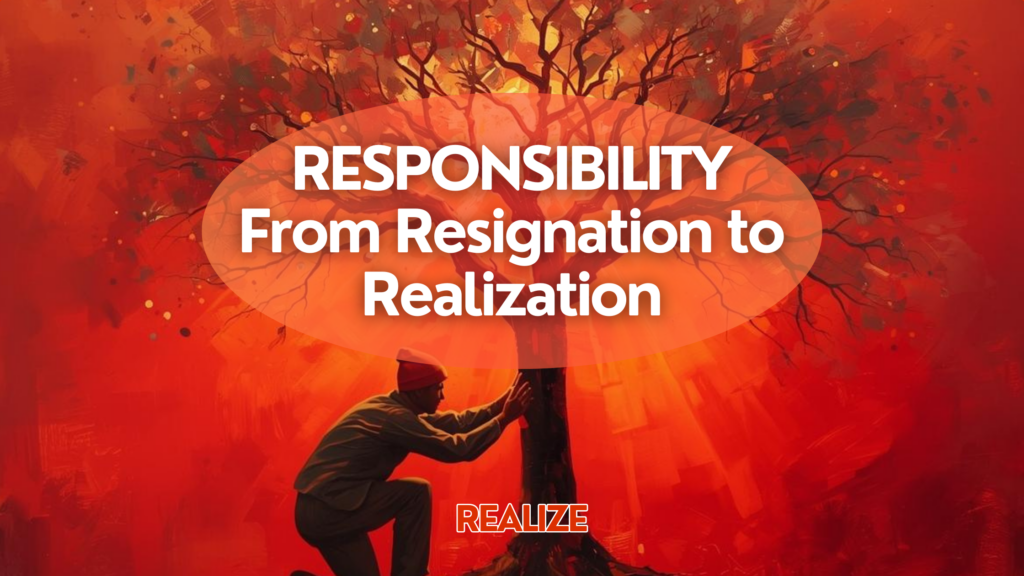
The Kale Smoothie Chronicles
It’s January 1st. You’re wearing new workout clothes that still have the tags on. Your fridge is stocked with kale, your journal gleams with untouched pages, and your spirit hums with the anthem of This Is My Year. Fast-forward 72 hours. The kale is “glaring” at you defiantly, the journal collects coffee rings, and your outfit—now tagless—doubles as pajamas. By January 5th, your “new you” smoothie tastes less like vitality and more like regret, garnished with chia seeds.
We’ve all been there. Resolutions burst like confetti on New Year’s Eve, only to dissolve into a soggy mess by mid-January. But what if the problem isn’t you? What if it’s the idea of resolutions itself?
Imagine declaring, “I’m a runner now!” while your inner voice snorts, “You? A runner? The only thing you’ve chased is the ice cream truck.” Resolutions often fail because they’re cosmetic fixes slapped onto unchanged identities.
Habits researcher James Clear nails it: “Your behaviors are a reflection of your identity.” Trying to “do healthy things” while clinging to an “I’m lazy” self-image is like planting orchids in a desert. The environment rejects the mismatch.
We’ve been sold a lie: “If you want it enough, you’ll stay motivated!” But motivation is as reliable as a Wi-Fi signal on the subway. It flickers. It dips. It vanishes when we need it most.
Motivation isn’t a prerequisite—it’s a result. We don’t need to wait to “feel like it” to act; as we take action, we start to feel like it.
“Should” is the guilt-tripping cousin of responsibility. “I should meditate. I should network. I should go to bed earlier.” But “shoulds” are foggy, guilt-driven obligations—not choices. They’re societal expectations masquerading as personal goals.
“Shoulds” drain our agency. They turn life into a chore list rather than a canvas.
Let’s reframe responsibility. It’s not a stern taskmaster wagging a finger. It’s your response-ability—your power to choose how you meet life, moment by moment.
You’re the captain of a ship. You can’t control the storms (traffic jams, toddler meltdowns, global pandemics), but you can adjust the sails. Responsibility isn’t about fixing everything; it’s about showing up as the hero of your story, not the victim.
It’s not just about doing responsible things, but becoming someone who takes responsibility.
New Year’s resolutions are noble. Take the classic “I will make better decisions for my health this year.” Quickly, it had dissolved into a litany of guilt. “Better decisions” felt like a foggy mandate—a judgmental ghost hovering over the morning latte and late-night doomscrolls.
Let’s experiment with a radical reframe. Instead of vague self-improvement, let’s ask: “What would a responsible, healthy me choose today?”
Some days, the answer may be laughably small:
The magic isn’t in the acts themselves, but in the identity shift they spark. Each time we choose water, movement, or connection, we whisper to our nervous system: “You’re someone who cares about this body.” Over weeks, those whispers become a roar.
By March, we notice something wild: Our “responsible choices” no longer feel like chores. They are like coming home to ourselves. The person who once guilt-drank green smoothies now craves walks not because they “should,” but because sunlight on their face feels good.
Responsibility isn’t about perfection—it’s about practice. We don’t have to overhaul our lives overnight (although that is an option); we turn wellness into a gentle rebellion, one micro-choice at a time.
What if this year, we focused less on doing and more on becoming? Instead of chasing arbitrary goals, let’s choose a North Star Identity—a guiding intention like “I am someone who protects my peace” or “I am someone who moves with joy.” Every tiny act aligned with this identity—a mindful breath, a phone-free dinner, an act of service—becomes an installment toward the person you’re becoming. No grand gestures needed. Just daily whispers of intention that rewire your self-image, turning “trying” into being. Clarity over chaos. Progress without pressure. Joy that compounds. Let’s rewrite our stories, honing in on the best character for it, one sincere, aligned choice at a time.
Let’s be honest: We’ve all ghosted ourselves. We’ve vowed to wake up early, only to snooze until panic mode. We’ve sworn we’ll meal prep, then default to cereal for dinner (again). But here’s the secret no one tells us: Every time we keep a promise to ourselves—no matter how tiny—we’re not just checking a box. We’re bit by bit affirming, “I see you. You matter.” These kept promises compound like interest in the bank of our minds. No grand gestures required—just the daily choice to show up, even halfway. Over time, we build a quiet kind of confidence, the kind that comes from knowing, deep down: “I can depend on me.”
The almost-too-small-to-count acts of integrity lead to profound change. Shifts don’t come because of what some guru or influencer said, but because we’re practicing what it feels like to honor our own word. Pausing for one deep breath when stress creeps in, as if to say, “I’m here. I’ve got this.” Even something as simple as texting a friend, “Hey, you good?” becomes a brick in the foundation of trust we’re rebuilding with ourselves. These aren’t chores; they’re love notes in action.
Here’s the beautiful paradox: The more we keep these agreements, the more we want to level up—not out of obligation, but because it feels delicious to trust ourselves, to feel competent and engaged. What if “responsibility” isn’t a stern teacher grading our performance, but a dance partner saying, “I’ll follow your lead”? When we show ourselves we’re reliable, we stop chasing motivation and start embodying it. We realize self-respect isn’t earned through perfection—it’s woven through the daily choice to say, “I’m worth showing up for.” And suddenly, life’s possibilities feel less like a to-do list and more like a meaningful story we’re co-authoring with our own courage.
Let’s be honest: We’ve all clung to chaos like a security blanket. “I’m too busy to go to the gym/date/start my business/call my friend/have a life!” we declare, as if overwhelm were a badge of honor. “I’ll do that tomorrow,” we sigh, while secretly relieved to dodge the discomfort of today. Here’s the gentle truth no one tells us: We don’t avoid responsibility because we’re lazy or incapable—we do it because, in some quiet way, it protects us.
That chronic “busyness”? It’s a fortress against disappointment and rejection. The endless “I’ll figure it out later”? A cozy bunker shielding us from the vulnerability of trying. We cling to these reasons because they serve us—offering safety, sympathy, or the sweet relief of lowered expectations. Here’s the question that cracks the code: “What’s the hidden payoff for staying stuck?”
Maybe it’s the comfort of familiarity. Perhaps it’s the luxury of blaming circumstances instead of owning our power. Whatever it is, naming it isn’t a condemnation—it’s an act of compassion. When we uncover, “Oh, I’ve been choosing this because…” we’re not admitting defeat. We’re turning on the lights.
And that’s where freedom begins. Once we see the trade-off—“I’m trading my agency for temporary comfort”—we get to choose: “Is this really worth it?” Spoiler: The answer is almost always a sheepish, yet liberating “No.”
So let’s thank that old chaos for its service. Then, with kindness and a dash of humor, let’s reclaim our agency. Because we are not meant to live in the shadows of “someday.” We are intended to step into the light of “I’m going in.”
Let’s name the unsexy symptoms of irresponsibility we’ve all worn like scratchy sweaters: the blame olympics (“If only my boss/genes/astrology sign would change!”), the soul-crushing waiting for someday loop, or the artful dodge of “I’m just… too tired.” (Spoiler: We’re often tired because we’re avoiding responsibility, not the other way around.)
Irresponsibility disguises itself as a victimhood badge—“Look how powerless I am!”—but secretly, it’s a sneaky comfort zone. We scroll, sigh, and surrender to trends (hello, miracle morning routines and kombucha empires) because following someone else’s script feels safer than writing our own. Yet here’s the liberating truth beneath the chaos: Every time we blame, we hand our power to a ghost. Every time we numb, we mute our intuition. Every time we wait, we shrink.
The antidote isn’t shame—it’s a single, tiny choice. What if today, instead of “someday,” we reclaimed one pixel of agency? Maybe it’s choosing to pause before reacting. Or admitting, “I’m overwhelmed—what’s one thing I can actually control?” Even choosing rest on purpose instead of burnout-by-default counts. Because here’s the secret they don’t tell you: Responsibility isn’t a cage. It’s the key.
2026 isn’t about doing more—it’s about seeing differently. Responsibility isn’t about blowing up a to-do list or our calendars, but a direct line to your future self. It’s not about cramming in “better habits,” but shedding the old skin of “I’ll try” and stepping into the quiet certainty of “I am.” When we ask, “Who do I want to become?” we are not drafting a résumé of achievements—we are choosing the lens through which we’ll experience our life. A “joy-over-hustle” identity isn’t a goal; it’s a gravitational force that pulls choices into alignment.
And those “today-sized” commitments? They’re not tasks—they’re tiny mirrors reflecting who we’ve decided to be. A five-minute walk isn’t exercise; it’s a ritual asserting, “I am someone who shows up.” As for releasing the “payoffs” of irresponsibility? That’s not sacrifice—it’s trading the cheap thrill of excuses (“Look how busy I am!”) for the quiet charge of sovereignty. This year isn’t about fixing ourselves. It’s about realizing we were never broken—just momentarily forgetful of our own agency. The revolution starts when we stop asking “What should I do?” and start wondering, “Who gets to live this life?”
Responsibility gets a bad rap. We’ve mistaken it for obligation—a joyless slog of “shoulds” and spreadsheets. But here’s the quiet revolution: Responsibility, when rooted in self-respect, isn’t a cage but a field of unlimited possibilities. Let’s trade the fireworks of resolutions for the steady glow of showing up—not perfectly, but wholeheartedly. When we release the hidden payoffs of chaos (the drama, the excuses, the cozy numbness), we uncover something radical: Responsibility is how we fall in love with our own lives.
Our choices are music notes in a collective masterpiece. Every time we own a tiny truth—“I’m scared,” “I’m ready,” “I choose rest”—we’re not just fixing ourselves. We’re rewriting the story of what it means to be human: messy, tender, and fiercely alive.
So here’s to 2026—the year we trade “someday” for “today,” not because we’re pressured, but because we’re done ghosting ourselves. We realize that responsibility isn’t about carrying the world on our shoulders, but about finally feeling the ground beneath our feet. Our lives aren’t symphonies to perfect or problems to solve. They’re wild, improvised—best played when we trust ourselves enough to pick up the instrument and begin.



Most people are under the impression that they are stuck in a chaotic and uninspiring life. At Realize, with life coaching, we guide our clients through a proven framework to confidently build a life where they thrive.


Florence Doisneau
Certified Life Coach
954.826.9172
florence@realizeunlimited.com